

Arthur Conan Doyle and the Sherlock Holmes Phenomenon: From Fairy Hoaxes to Modern-Day Deductive Reasoning
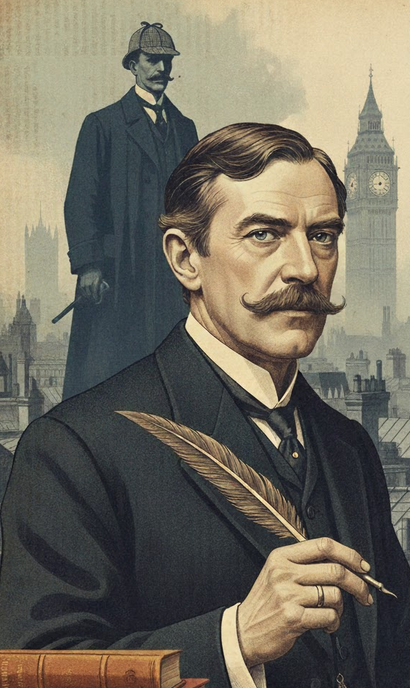
Ever wondered how the creator of literature's most logical detective could fall for one of history's most charming hoaxes? Welcome to the delightful contradiction that is Sir Arthur Conan Doyle! Here at Forage With Me Books, we absolutely love diving into the quirky stories behind our favorite authors, and Doyle's tale is one of the most fascinating paradoxes in literary history.
Picture this: a trained physician who created Sherlock Holmes, the master of deductive reasoning and cold, hard logic, becomes completely convinced that two young girls had photographed actual fairies dancing in their garden. It's like finding out that the author of a cookbook on healthy eating survives entirely on candy bars! But that's exactly what makes Doyle's story so wonderfully human and endlessly intriguing.
The Great Fairy Fiasco: When Doyle Got Fooled
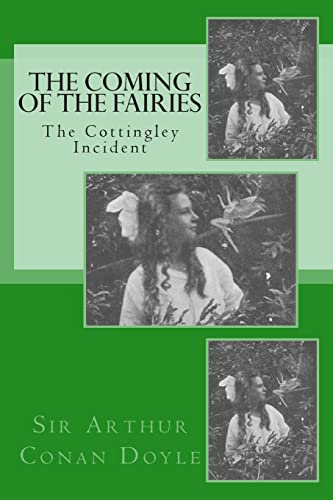
Let's start with the juiciest part of this tale, the Cottingley Fairies affair of 1917. Two young cousins, Elsie Wright (16) and Frances Griffiths (9), claimed they'd photographed fairies in their garden in Cottingley, Yorkshire. The photos showed the girls posing with what appeared to be tiny winged creatures dancing around them.
Now, you might think anyone would be skeptical of such extraordinary claims, especially the creator of Sherlock Holmes! But Doyle was completely enchanted (pun intended). By 1922, he'd become such a passionate believer that he wrote an entire book defending the photographs called The Coming of the Fairies.
The irony is absolutely delicious! Here was a man who'd created a character famous for saying "when you have eliminated the impossible, whatever remains, however improbable, must be the truth", yet Doyle never applied this logic to some obviously doctored photos. The fairies were actually paper cutouts traced from illustrations in Princess Mary's Gift Book, but it took until the 1980s for the cousins to fully confess to the hoax.
Holmes Through the Ages: From Page to Screen
Speaking of fascinating contradictions, let's talk about how Sherlock Holmes has evolved from Doyle's original stories into the cultural phenomenon we know today!
The BBC Sherlock Era
Okay, let's address the elephant in the room, yes, BBC's Sherlock starring Benedict Cumberbatch and Martin Freeman can be absolutely, delightfully corny at times. The dramatic coat billowing, the over-the-top deductions, Sherlock texting instead of sending telegrams, it's all wonderfully ridiculous! And you know what? That's perfectly fine! Sometimes we need our entertainment to be a bit extra, a bit theatrical. It's comfort food for the brain.
What BBC Sherlock does brilliantly is capture the essence of Holmes's deductive method while updating it for modern audiences. Watching Sherlock deduce someone's entire life story from their phone case or coffee stains never gets old, even if we're rolling our eyes at his dramatics.
Other Holmes Adaptations
Elementary with Jonny Lee Miller and Lucy Liu deserves mention too, it's... fine. Really, it's a perfectly competent procedural that happens to use the Holmes name. But let's be honest, it lacks that spark of madness that makes Holmes truly compelling. It's more like "Generic Detective Show #47 with Familiar Character Names."

The real magic happens in the countless other adaptations: from Basil Rathbone's classic films to House M.D. (yes, that's a Holmes adaptation!), to the delightful Enola Holmes series that puts Sherlock's sister front and center.
Let's start with the juiciest part of this tale, the Cottingley Fairies affair of 1917. Two young cousins, Elsie Wright (16) and Frances Griffiths (9), claimed they'd photographed fairies in their garden in Cottingley, Yorkshire. The photos showed the girls posing with what appeared to be tiny winged creatures dancing around them.
Now, you might think anyone would be skeptical of such extraordinary claims, especially the creator of Sherlock Holmes! But Doyle was completely enchanted (pun intended). By 1922, he'd become such a passionate believer that he wrote an entire book defending the photographs called The Coming of the Fairies.
The irony is absolutely delicious! Here was a man who'd created a character famous for saying "when you have eliminated the impossible, whatever remains, however improbable, must be the truth", yet Doyle never applied this logic to some obviously doctored photos. The fairies were actually paper cutouts traced from illustrations in Princess Mary's Gift Book, but it took until the 1980s for the cousins to fully confess to the hoax.
Holmes Through the Ages: From Page to Screen
Speaking of fascinating contradictions, let's talk about how Sherlock Holmes has evolved from Doyle's original stories into the cultural phenomenon we know today!
The BBC Sherlock Era
Okay, let's address the elephant in the room, yes, BBC's Sherlock starring Benedict Cumberbatch and Martin Freeman can be absolutely, delightfully corny at times. The dramatic coat billowing, the over-the-top deductions, Sherlock texting instead of sending telegrams, it's all wonderfully ridiculous! And you know what? That's perfectly fine! Sometimes we need our entertainment to be a bit extra, a bit theatrical. It's comfort food for the brain.
What BBC Sherlock does brilliantly is capture the essence of Holmes's deductive method while updating it for modern audiences. Watching Sherlock deduce someone's entire life story from their phone case or coffee stains never gets old, even if we're rolling our eyes at his dramatics.

The Modern Holmes: Why We Still Need Deductive Thinking
In our age of information overload and fake news, Holmes's approach to careful observation and logical reasoning is more relevant than ever! The same skills that help Holmes solve murders can help you:
Spot misleading headlines or suspicious claims
Make better decisions based on evidence rather than emotion
Improve your problem-solving abilities at work
Become a better judge of character
Develop genuine critical thinking skills



The beautiful irony is that while Arthur Conan Doyle himself sometimes failed to apply these principles (hello, fairy photos!), his fictional creation continues to inspire people to think more clearly and observe more carefully.
Your Holmes Journey Starts Here
Whether you're drawn to the classic stories, obsessed with BBC's gloriously over-the-top Sherlock, or interested in developing real deductive skills, there's a whole world of Holmes-inspired learning waiting for you!
Start with the original stories: they're surprisingly accessible and still incredibly entertaining after more than 130 years. Then dive into some of the modern training resources we've mentioned. Most importantly, start practicing observation and deduction in your daily life. You'll be amazed at how much more you notice about the world around you!
Remember, even the great Arthur Conan Doyle wasn't immune to being fooled by a clever hoax. The goal isn't perfection: it's developing the tools to think more clearly and observe more carefully. Some days you'll be brilliant, some days you'll believe in garden fairies, and that's perfectly human!
Ready to start your own deductive journey? Browse our mystery section at Forage With Me Books, where we've got everything from original Holmes adventures to modern training guides. Who knows what fascinating contradictions and delightful mysteries you'll uncover!
Happy foraging, future detectives! 🔍
P.S. - When you purchase through our Amazon affiliate links, you're helping support our little bookstore and our mission to connect readers with their next great literary adventure. Thank you for being part of our community!